Workflows
Repeat Purchase Rate: The Metric That Actually Drives eCommerce Growth
The most profitable growth doesn’t come from new customers. It comes from getting existing customers to come back.
2 min read
What is repeat purchase rate?
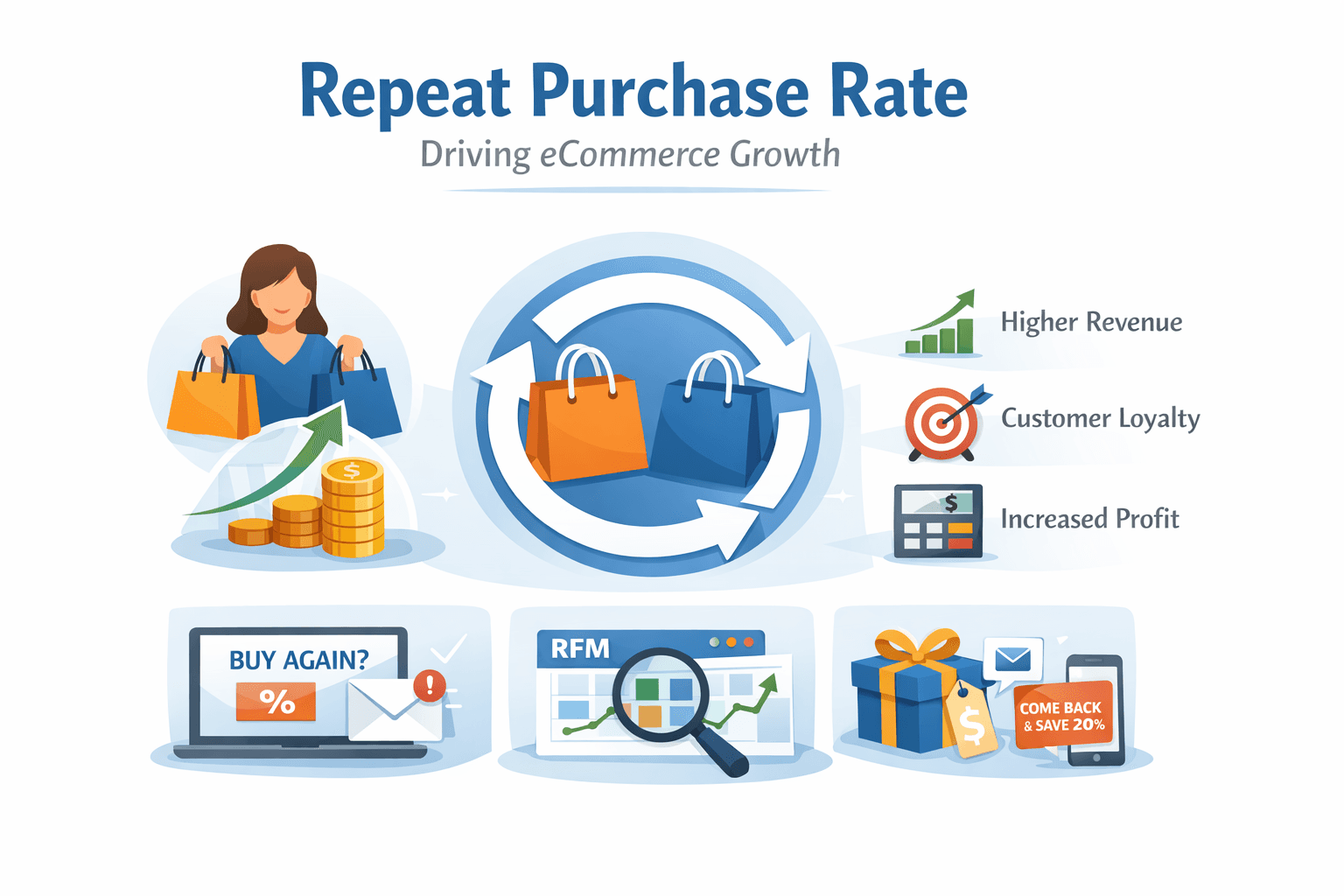
Repeat purchase rate measures the percentage of customers who come back and buy again.
A simple way to think about it:
Out of all your customers, how many made more than one purchase?
Why it matters more than you think
Repeat purchase rate is not just another KPI.
It directly impacts:
💰 Revenue stability
📈 Customer lifetime value (CLV)
📉 Dependency on paid acquisition
🧠 Predictability of your business
If your repeat purchase rate is low:
👉 You are constantly paying to replace lost customers
👉 Your growth becomes expensive and fragile
The “second order problem”
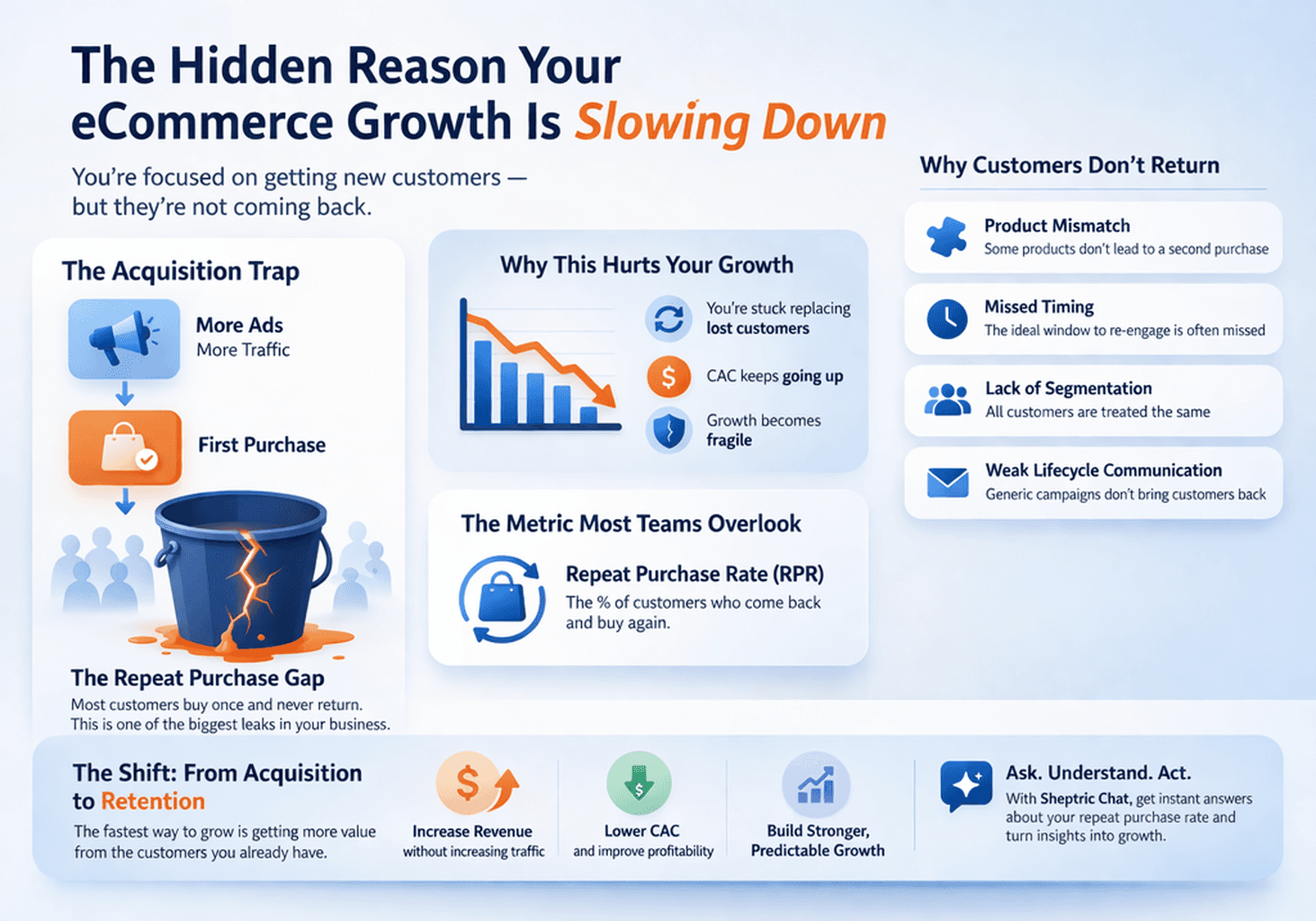
Most stores focus heavily on getting the first purchase.
But the biggest drop-off happens right after that.
A huge percentage of customers buy once — and never return.
This is what we call the second order gap.
And it’s where the biggest opportunity lies.
Why most stores struggle to improve it
Even though RPR is critical, most teams struggle to improve it because:
1. They don’t track it consistently
Different teams calculate it differently — or not at all.
2. They don’t know what drives it
Which products? Which categories? Which campaigns?
3. They react too late
By the time a customer is “lost,” it’s already too late.
What actually drives repeat purchases
Improving repeat purchase rate is not random — it’s driven by a few key levers:
1. Product and category strategy
Some products naturally lead to repeat purchases.
Others are one-off.
👉 You need to know:
Which categories create repeat behavior
Which products are dead ends
2. Timing is everything
There is a “window” where a customer is most likely to return.
Miss it — and the probability drops fast.
👉 The key is:
identifying that window
acting within it
3. Segmentation (RFM)
Not all customers are equal.
You should treat differently:
Champions
Loyal customers
At-risk customers
One-time buyers
👉 Without segmentation, your lifecycle efforts are blunt.
4. Lifecycle communication
Repeat purchases don’t happen by accident.
They are driven by:
email flows
retargeting
personalized offers
👉 Generic campaigns won’t move the needle.
What happens if you improve it?
Let’s make this tangible.
If you increase your repeat purchase rate by even 5–10 percentage points:
Revenue increases — without increasing traffic
Customer acquisition cost (CAC) effectively drops
Profitability improves significantly
👉 This is one of the highest ROI levers in eCommerce.
The real challenge: getting answers
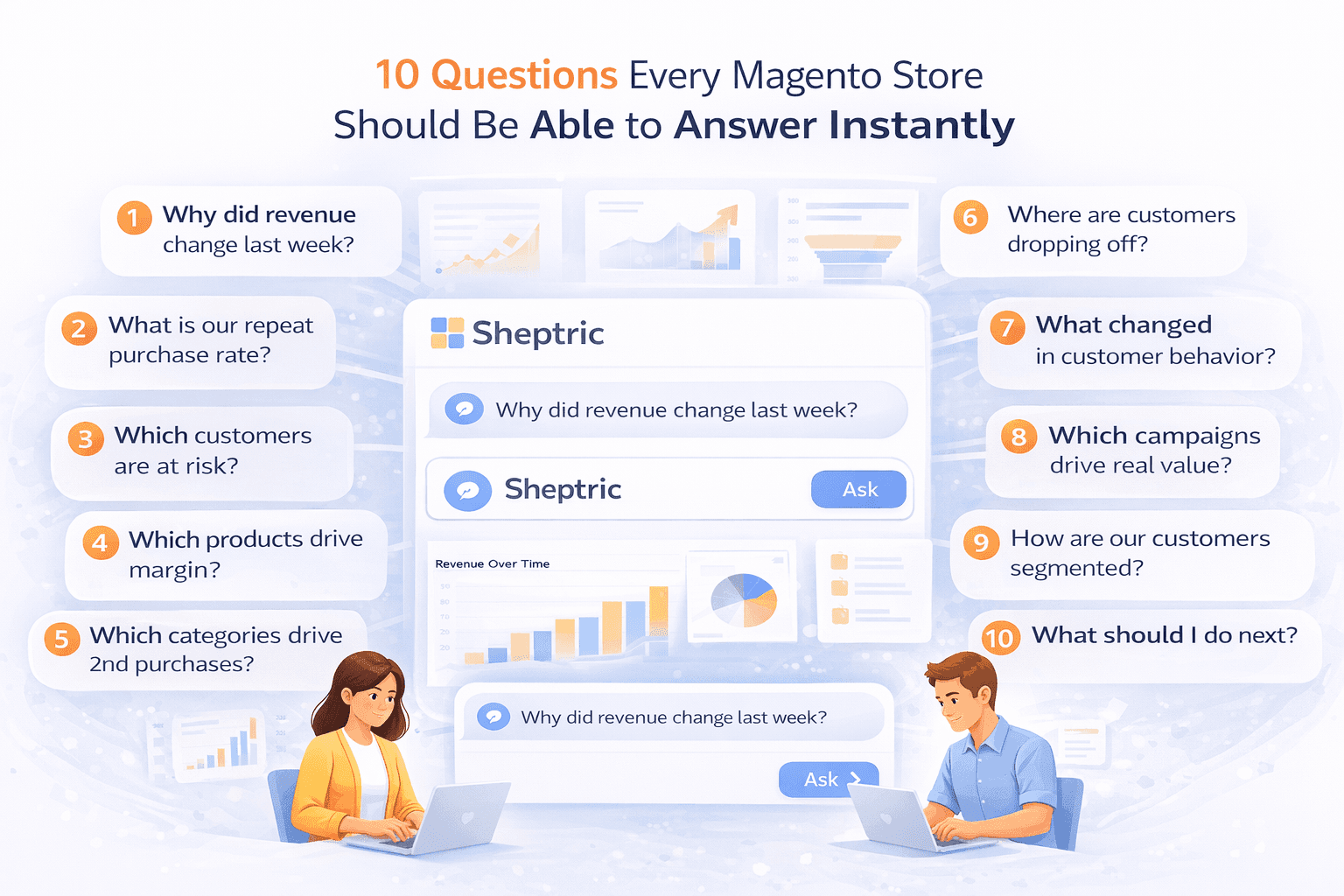
Most of the questions you need to improve RPR are simple:
What is my repeat purchase rate right now?
Which products drive repeat purchases?
Which customers bought once but didn’t return?
When do customers typically come back?
But getting these answers is not simple.
It often requires:
multiple reports
manual analysis
waiting for data teams
A better way: just ask
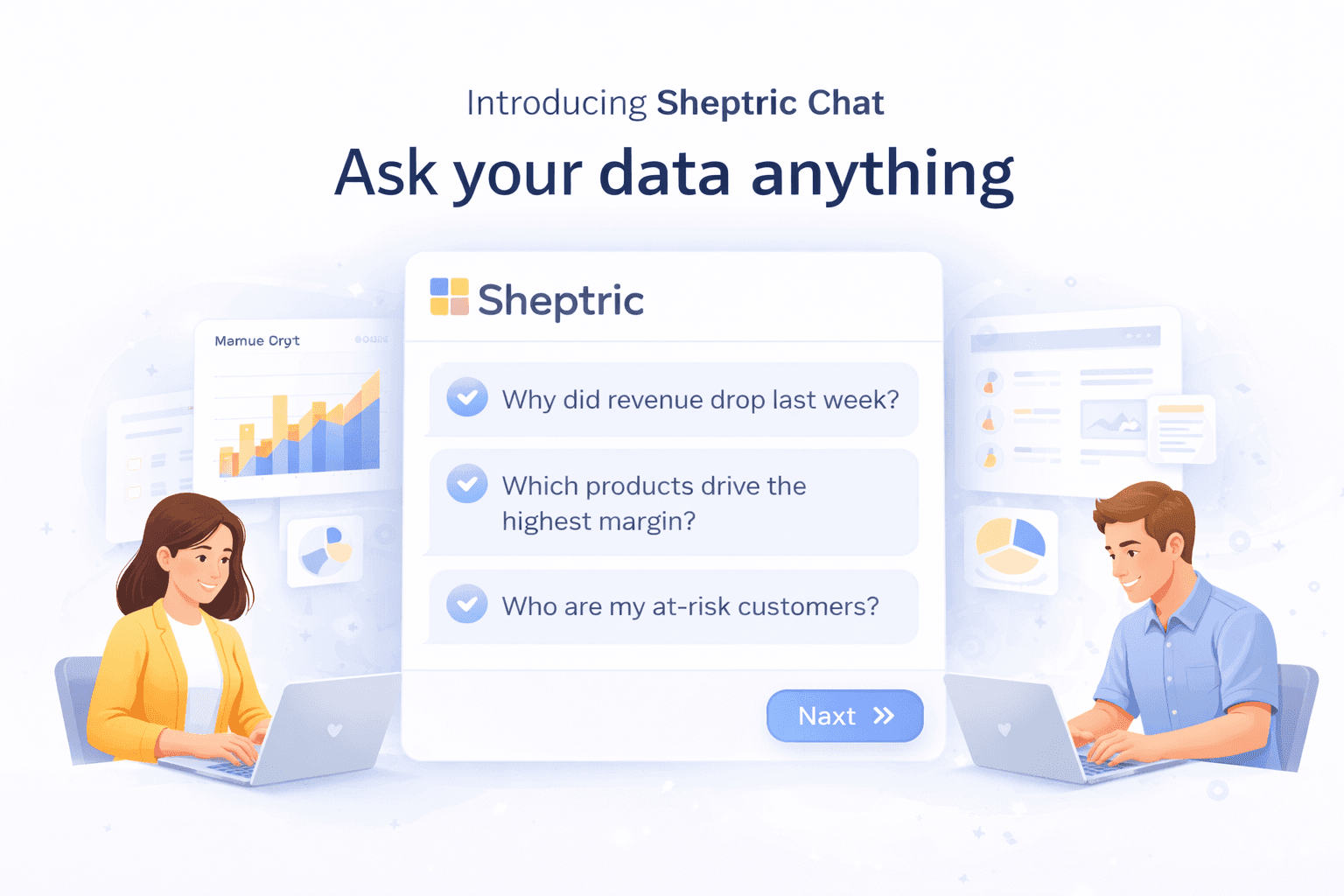
With Sheptric Chat, you can ask:
“What is my repeat purchase rate?”
“Which categories drive second purchases?”
“Who are my one-time buyers that didn’t return?”
And get instant answers.
From insight to action
The real value is not just knowing your repeat purchase rate.
It’s knowing:
👉 what to do about it
target at-risk customers
optimize product flows
improve lifecycle campaigns
focus on high-repeat categories
Final thought
If you’re only focused on acquisition, you’re leaving growth on the table.
The real opportunity is not getting more customers.
It’s getting more value from the ones you already have.
👉Want to see your repeat purchase rate in action?
Book a demo and explore your data with Sheptric Chat.
View more articles
Learn actionable strategies, proven workflows, and tips from experts to help your product thrive.